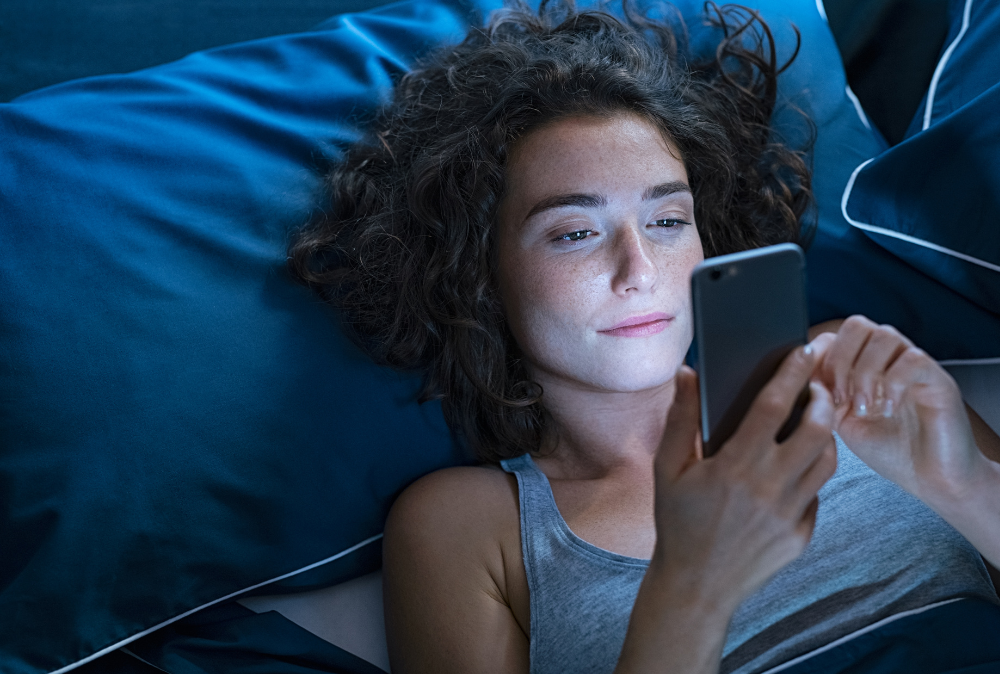
Most of us spend our evenings surrounded by glowing screens — phones, tablets, laptops, TVs. All of these give off a mix of visible light, including a short wavelength type of light known as blue light.
Blue light can influence alertness, hormone production, and sleep cycles. At night, when our bodies expect darkness, that same blue light sends mixed signals — essentially telling the brain that it’s still awake time. Follow along with us as we learn why blue light affects sleep and how to get your sleep back on track.
Our bodies use the hormone melatonin to wind down at the end of the day. As the sun sets and light levels drop, melatonin naturally rises, nudging us toward drowsiness.
Blue light can interrupt the sleep cycle at this step. It activates special cells in the eye that send “stay awake” messages to the brain’s circadian clock, which lowers melatonin and delays the body’s natural transition into sleep mode.
Research shows that even an hour or two of blue light exposure in the evening can significantly suppress melatonin and push back the body’s internal bedtime. That can lead to falling asleep later than planned, getting less restorative sleep, or waking up feeling groggy.
With so many screens in our lives, it’s no surprise that blue light exposure is common at night. Studies consistently link evening screen time with trouble falling asleep, shorter sleep duration, and lower-quality sleep — especially for teens and young adults.
Some newer research suggests the story may be a bit more complicated. It’s possible that the content we’re consuming — social media, videos, games, emails — plays just as big a role as the blue light itself.
Still, the biological effect of blue light on melatonin is well-supported, and reducing nighttime exposure is widely recommended by sleep specialists.
Lack of sleep doesn’t just make you tired. Poor or inconsistent sleep can affect mood, focus, stress levels, and overall quality of life. Over time, ongoing sleep disruption and circadian rhythm issues may contribute to broader health concerns.
Even small delays in falling asleep, whether from blue light or from late-night scrolling, can quietly chip away at how rested and balanced you feel during the day.
Many people find relief by lowering their blue light exposure at night. That might mean dimming screens, using night modes or warm-tone filters, or cutting down screen time before bed. Warm or low-light lamps can also help signal to the brain that it’s time to slow down.
These changes can make a real difference, but they aren’t a cure-all. If you’re still struggling with falling asleep, staying asleep, or feeling rested — even after adjusting your lighting and screen habits — it might be time to explore additional support.
If blue light isn’t the whole story behind your sleep issues, you don’t have to figure it out alone. At KindlyMD, we help people uncover the root causes of their sleep problems and explore personalized sleep support treatment options that may include prescription medication or Medical Cannabis where appropriate.
If you’re ready for better nights and more energized mornings, schedule a sleep support visit with KindlyMD today. Together, we can build a plan that works for your body, your schedule, your life.